
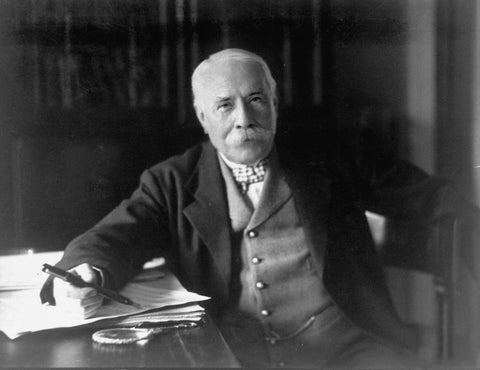
Elgar

BACH Prelude and Fugue in E-flat, “St. Anne”
BACH Toccata and Fugue in D minor
BENJAMIN Overture to an Italian Comedy
BRAHMS Piano Quartet No. 1
CHAUSSON Symphony in B-flat
DVOŘÁK Carnival Overture
DVOŘÁK In Nature’s Realm
ELGAR Enigma Variations
GLAZUNOV The Seasons
GLINKA Ruslan and Ludmila - Overture
GOLDMARK Rustic Wedding Symphony
GRIEG Peer Gynt excerpts
MENDELSSOHN A Midsummer Night’s Dream excerpts
R. STRAUSS Also Sprach Zarathustra
R. STRAUSS Aus Italien - On the Shores of Sorrento
SAINT-SAËNS Danse macabre
SMETANA The Bartered Bride - Overture
STOCK Symphonic Waltz
TCHAIKOVSKY 1812 Overture
TCHAIKOVSKY Marche slave
WAGNER Siegfried - Forest Murmurs
WAGNER Die Meistersinger - Prelude
PLUS MUSIC BY: BIZET, CAREY, DOHNÁNYI, ENESCU, François Schubert, GLIÈRE, HANDEL, IPPOLITOV-IVANOV, J. Strauss II, Järnefelt, LIADOV, MACDOWELL, MEACHAM, MOZART, PAGANINI, Ponchielli, Rezniček, Rimsky-Korsakov, Schubert, Schumann, Sibelius, Simonetti, Suk, Suppé, Thomas, Toch, Volkmann, Walton, Weber and Wolf-Ferrari
Studio recordings, 1930-1941
Chicago Symphony Orchestra
conducted by Frederick Stock

ELGAR Pomp and Circumstance March No. 1
ROSSINI The Barber of Seville - Overture
MENDELSSOHN Hebrides Overture
J. STRAUSS II Artist’s Life - Waltz
WEBER Euryanthe - Overture
plus piano solos by CHOPIN, JENSEN, LISZT and MENDELSSOHN
Studio recordings, 1923-1930
Total duration: 79:01
Rudolph Ganz, conductor and piano
St. Louis Symphony Orchestra
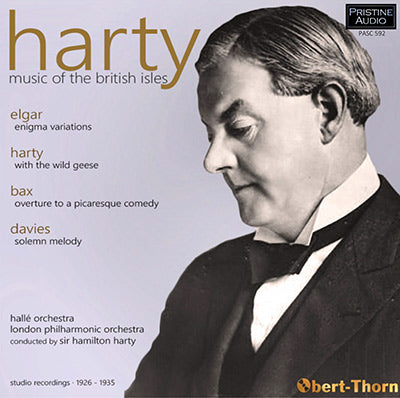
ELGAR Enigma Variations
BAX Overture to a Picaresque Comedy*
HARTY With the Wild Geese
HARTY Scherzo from An Irish Symphony
DAVIES Solemn Melody for Organ and Orchestra
ELGAR Dream Children
ELGAR The Apostles - By The Wayside
Studio recordings, 1926-1935
Total duration: 74:52
Hallé Orchestra & Chorus
*London Philharmonic Orchestra
conducted by Sir Hamilton Harty
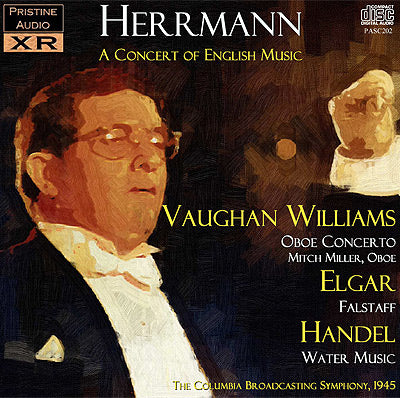
HANDEL Water Music Suite (arr. Harty)
VAUGHAN WILLIAMS Concerto for Oboe and Strings in A minor
ELGAR Falstaff, Op. 68
Recorded 1945
Total duration: 75:50
Mitch Miller, Oboe
The Columbia Broadcasting Symphony
conducted by Bernard Herrmann
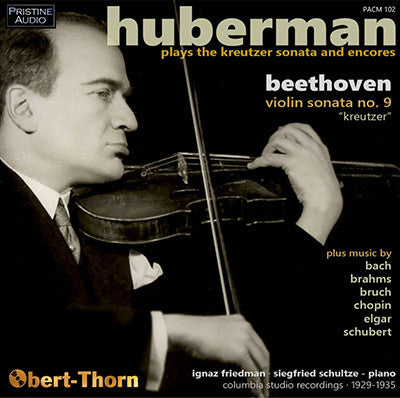
BEETHOVEN Violin Sonata No. 9 'Kreutzer'
Encores by BACH, BRAHMS, BRUCH, CHOPIN, ELGAR, SCHUBERT
Studio recordings, 1929-1935
Total duration: 78:06
Bronislaw Huberman, violin
Ignaz Friedman, piano
Siegfried Schultze, piano
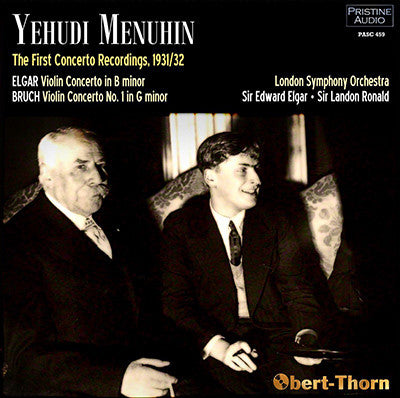
BRUCH Violin Concerto No. 1
ELGAR Violin Concerto
Studio recordings, 1931/32
Total duration: 72:36
Yehudi Menuhin violin
London Symphony Orchestra
Sir Edward Elgar conductor
Sir Landon Ronald conductor
