USA customers: For the lowest CD shipping rate, please order one album at a time, up to 3 CDs.

Dvořák

Dvořák
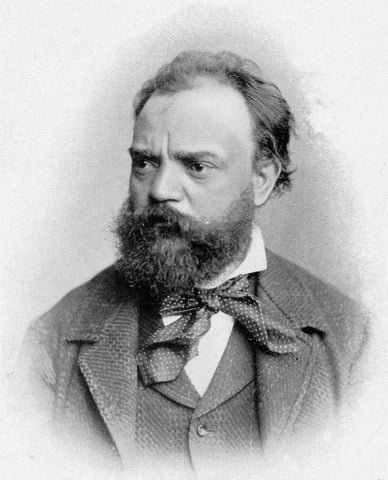
Antonín Leopold Dvořák (8 September 1841 – 1 May 1904) was a Czech composer. After Bedřich Smetana, he was the second Czech composer to achieve worldwide recognition. Following Smetana's nationalist example, Dvořák frequently employed aspects, specifically rhythms, of the folk music of Moravia and his native Bohemia. Dvořák’s own style has been described as ‘the fullest recreation of a national idiom with that of the symphonic tradition, absorbing folk influences and finding effective ways of using them’.

Dvořák displayed his musical gifts at an early age, being an apt violin student from age six. The first public performances of his works were in Prague in 1872 and, with special success, in 1873, when he was aged 31. Seeking recognition beyond the Prague area, he first submitted a score of his First Symphony to a prize competition in Germany, but he did not win, and the manuscript, not returned, was lost until rediscovered many decades later. Then in 1874 he first made a submission for the Austrian State Prize for Composition, including scores of two further symphonies and other works. Johannes Brahms, unbeknownst to Dvořák, was the leading member of the jury and was highly impressed. The prize was awarded to Dvořák for 1874[a] and again in 1876 and in 1877, when Brahms and the prominent critic Eduard Hanslick, also a member of the jury, made themselves known to him. Brahms recommended Dvořák to his publisher, Simrock, who soon afterward commissioned what became the Slavonic Dances, Op. 46. These were highly praised by the Berlin music critic Louis Ehlert in 1878, the sheet music (of the original piano 4-hands version) had excellent sales, and Dvořák’s international reputation at last was launched.

Dvořák’s first piece of a religious nature, his setting of Stabat Mater, was premiered in Prague in 1880. It was very successfully performed in London in 1883, leading to many other performances in the United Kingdom and United States. In his career, Dvořák made nine invited visits to England, often conducting performances of his own works. His Seventh Symphony was written for London. Visiting Russia in March 1890, he conducted concerts of his own music in Moscow and Saint Petersburg. In 1891 Dvořák was appointed as a professor at the Prague Conservatory. In 1890–91, he wrote his Dumky Trio, one of his most successful chamber music pieces. In 1892, Dvořák moved to the United States and became the director of the National Conservatory of Music of America in New York City. While in the United States, Dvořák wrote his two most successful orchestral works. The Symphony From the New World spread his reputation worldwide. His Cello Concerto is one of the most highly regarded of all cello concerti. Also, he wrote his American String Quartet, his most appreciated piece of chamber music. But shortfalls in payment of his salary, along with increasing recognition in Europe and an onset of homesickness, led him to leave the United States in 1895 and return to Bohemia.

Dvořák’s nine operas other than his first, Alfred, have librettos in Czech and were intended to convey Czech national spirit, as were some of his choral works. By far the most successful of the operas is Rusalka. Among his smaller works, the seventh Humoresque and the song "Songs My Mother Taught Me" are also widely performed and recorded. He has been described as "arguably the most versatile... composer of his time".
Close
Dvořák

Dvořák

Antonín Leopold Dvořák (8 September 1841 – 1 May 1904) was a Czech composer. After Bedřich Smetana, he was the second Czech composer to achieve worldwide recognition. Following Smetana's nationalist example, Dvořák frequently employed aspects, specifically rhythms, of the folk music of Moravia and his native Bohemia. Dvořák’s own style has been described as ‘the fullest recreation of a national idiom with that of the symphonic tradition, absor...
Read More
51 albums
Download from €9.00 | Buy on CD from €13.00

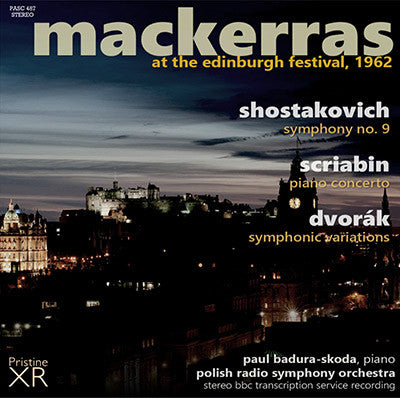
SHOSTAKOVICH  Symphony No. 9
SCRIABIN  Piano Concerto

DVORÁK  Symphonic Variations

    Live stereo concert recording, 1962
    Total duration: 74:47

    Paul Badura-Skoda, piano
    Polish Radio Symphony Orchestra

    Charles Mackerras
    , conductor


    Download from €9.00 | Buy on CD from €13.00
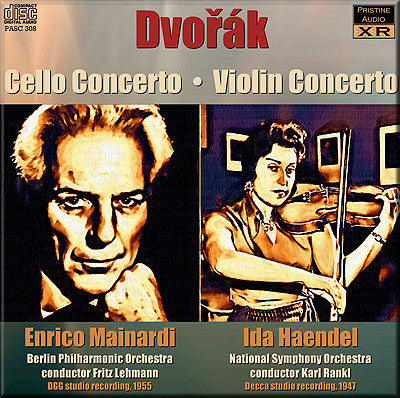
    DVOŘÁK Cello Concerto
    DVOŘÁK Violin Concerto

    Recorded in 1955 and 1947
    Total duration: 69:00

    Enrico Mainardi, cello
    Ida Haendel,
    violin
    Berlin Philharmonic Orchestra

    Fritz Lehmann,
    conductor
    National Symphony Orchestra

    Karl Rankl,
    conductor
    Download from €18.00 | Buy on CD from €25.00

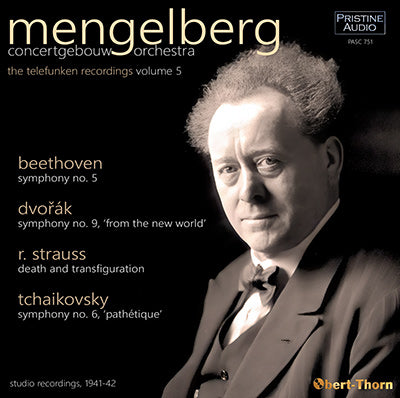
    BEETHOVEN Symphony No. 5
    DVOŘÁK Symphony No. 9 'From the New World'
    TCHAIKOVSKY Symphony No. 6 'Pathétique'
    R. STRAUSS Death and Transfiguration
    BORODIN In the Steppes of Central Asia

    Studio recordings, 1941/42
    Total duration: 2hr 25:28

    Concertgebouw Orchestra of Amsterdam
    conducted by Willem Mengelberg
    Download from €9.00 | Buy on CD from €13.00

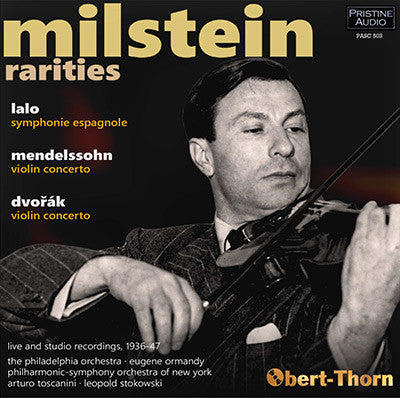
    LALO Symphonie espagnole
    MENDELSSOHN Violin Concerto
    DVOŘÁK Violin Concerto

    Recorded 1936-47
    Total duration: 66:17

    Nathan Milstein, violin

    The Philadelphia Orchestra
    conducted by Eugene Ormandy

    Philharmonic-Symphony Orchestra of New York
    conducted by Arturo Toscanini
    conducted by Leopold Stokowski
    Download from €22.00 | Buy on CD from €38.00

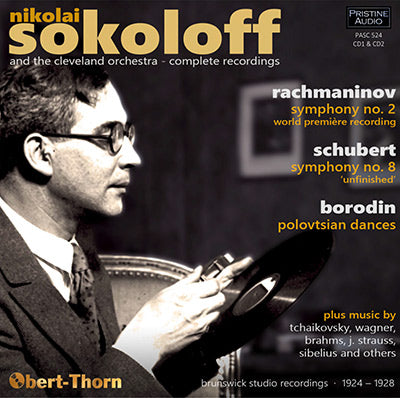
    RACHMANINOV Symphony No. 2 (world première recording)
    SCHUBERT Symphony No. 8, “Unfinished”
    BORODIN Polovtsian Dances
    and works by Tchaikovsky, Wagner, Brahms, J. Strauss, Sibelius and others

    Studio recordings, 1924-28
    Total duration:  3hr 0:20

    The Cleveland Orchestra
    conducted by Nikolai Sokoloff
    Download from €18.00 | Buy on CD from €25.00

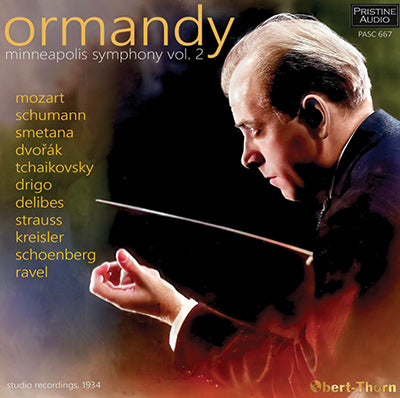
    MOZART Le Nozze di Figaro - Overture
    MOZART Eight German Dances
    SCHUMANN Symphony No. 4
    SMETANA Three Dances from The Bartered Bride
    DELIBES Music from Sylvia & La Source
    KREISLER Kreiserliana
    SCHOENBERG Verklärte Nacht
    music by Ravel, Tchaikovsky, Strauss, Dvořák, Drigo

    Studio recordings, 1934
    Total duration: 2hr 32:37

    Minneapolis Symphony Orchestra
    conducted by Eugene Ormandy