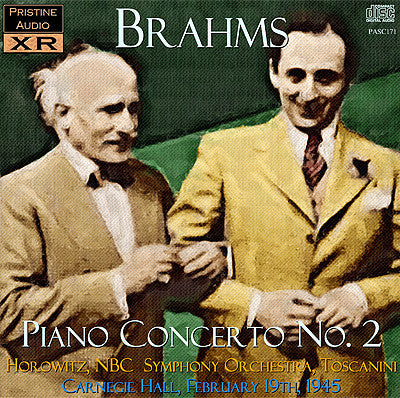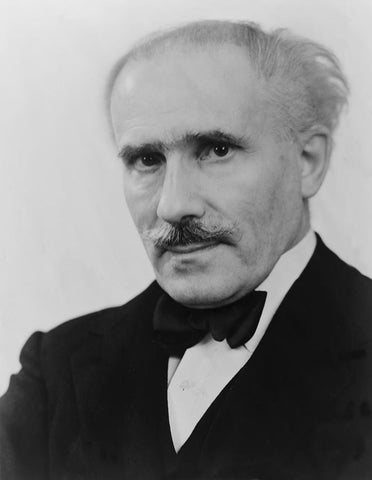
Arturo Toscanini (1867-1957) was an Italian conductor, one of the central figures in the history of orchestral and operatic performance. Born in Parma, he trained as a cellist and began his career in the theatre before an unexpected conducting debut in Rio de Janeiro in 1886 set him on a new path.
He became closely associated with La Scala, Milan, where he helped shape modern standards of operatic discipline, ensemble precision and fidelity to the written score. He later held major positions with the Metropolitan Opera and the New York Philharmonic, bringing the same exacting standards to both opera house and concert hall.
Toscanini’s conducting was marked by rhythmic urgency, structural clarity and an insistence on orchestral transparency. His reputation for ferocious rehearsal standards was inseparable from a musical ideal that valued precision, dramatic truth and directness over decorative effect.
In 1937 he became the first music director of the NBC Symphony Orchestra, an ensemble created for him in the United States. Through radio broadcasts, concerts and recordings, Toscanini became one of the first conductors whose interpretation and public persona reached a mass international audience.
His legacy is especially bound to Beethoven, Verdi, Wagner, Brahms, Debussy and the Italian operatic tradition, but his importance lies as much in his transformation of conducting itself: he made the conductor a modern public authority, accountable to the score and to the highest possible standard of execution.