

This album is included in the following sets:
This set contains the following albums:
- Producer's Note
- Full Track Listing
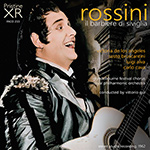
- Cover Art
When this Glyndebourne Il barbiere di Siviglia was first released in 1962 it immediately established itself as one of the most stylish and musically satisfying accounts of Rossini’s comedy on disc. More than six decades later it remains a model of balance, intelligence and theatrical poise.
Vittorio Gui was steeped in the Italian operatic tradition, yet his Rossini is never coarse or over-driven. Tempi are alert but never breathless, ensembles are finely judged, and the wit emerges through clarity rather than exaggeration. The performance trusts Rossini’s craftsmanship. The humour is allowed to arise naturally from rhythm, articulation and character.
At its centre stands Sesto Bruscantini’s Figaro, a portrayal of elegance rather than bluster. His “Largo al factotum” is brilliantly articulated, alive with verbal point, yet always musical. He is less a swaggering barber than an intelligent facilitator, moving deftly between intrigue and charm.
Victoria de los Angeles brings warmth and humanity to Rosina. Her “Una voce poco fa” is shaped with lyrical grace rather than vocal display, and throughout she suggests a young woman of quick intelligence and emotional depth. Luigi Alva’s Count Almaviva complements her perfectly, singing with refinement and stylistic ease.
The supporting cast is no less distinguished. Ian Wallace’s Bartolo avoids caricature, Carlo Cava’s Basilio is darkly resonant, and the smaller roles are taken with the same care that characterises the entire enterprise. The Glyndebourne Festival Chorus and Royal Philharmonic Orchestra respond to Gui with playing of transparency and rhythmic lift.
Recorded at Abbey Road Studios in September 1962, the original EMI production captured the performance with notable clarity. In this XR remastering the tonal palette has been subtly rounded and naturalised while preserving that clarity. The sound retains its immediacy but gains a touch of warmth, allowing the voices and orchestra to breathe more freely.
The result is a Barbiere that continues to feel fresh, civilised and theatrically alive. If Rossini’s comedy depends on precision and proportion, this recording understands both. It is not merely a classic of the catalogue, but a performance that still speaks directly to the listener today.
ROSSINI Il barbiere di Siviglia
disc one: 71:22
1. Sinfonia (7:34)
Act 1, Scene 1
2. Piano, pianissimo, senza parlar (3:02)
3. Ecco ridente in cielo (4:21)
4. Ehi, Fiorello? … Mio signore (1:10)
5. Mille grazie, mio signore (1:51)
6. Recitativo: gente indiscreta! (0:29)
7. La ran la le ra … Largo al factotum (4:45)
8. Recitativo: Ah che bella vita! (6:03)
9. Se il mio nome saper voi bramate (2:55)
10. Recitativo: Oh, cielo! … Nella stanza convien (1:10)
11. All’idea di quel metallo (3:05)
12. Piano, piano … Un’altra idea! (2:00)
13. Oh, il meglio mi scordavo (1:41)
14. Ah, che d’amore la fiamma io sento (1:31)
Act 1, Scene 2
15. Una voce poco fa (5:29)
16. Recitativo: Sì, sì, la vincerò (4:36)
17. La calunnia è un venticello (4:29)
18. Recitativo: Ah! Che ne dite? (3:20)
19. Dunque io son (2:56)
20. Fortunati affetti miei (2:08)
21. Recitativo: Ora mi sento meglio (1:29)
22. A un dottor della mia sorte (5:18)
disc two: 69:50
1. Finora in questa camera (0:33)
2. Ehi, di casa, buona gente (2:50)
3. Ah, venisse, il caro oggetto (2:45)
4. Dunque, lei vuol battaglia? (3:29)
5. Che cosa accadde (2:19)
6. Fermi tutti. Nessun si mova (1:22)
7. Fredda ed immobile (3:44)
8. Ma signor … ma un dottor (5:02)
Act 2
9. Recitativo: ma vedi il mio destino! (0:49)
10. Pace e gioia sia con voi (2:27)
11. Recitativo: insomma, mio signore (2:53)
12. Contro un cor che accende amore (5:15)
13. Recitativo: bella voce! Bravissima! (0:38)
14. Quando mi sei vicina (1:05)
15. Recitativo: bravo, signor barbiere (2:47)
16. Don Basilio! … Cosa veggo! (4:29)
17. Buona sera, mio signore (1:55)
18. Orsù, signor don bartolo (3:34)
19. Che vecchio sospettoso! (0:34)
20. Il vecchiotto cerca moglie (3:40)
21. Recitativo: dunque voi Don Alonso (3:01)
22. Temporale (2:59)
23. Ah, qual colpo inaspettato! (4:31)
24. Zitti, zitti, piano, piano (1:28)
25. Recitativo: ah disgraziati noi! (2:22)
26. Di sì felice innesto (2:18)
CAST
Figaro – Sesto Bruscantini
Rosina – Victoria de los Angeles
Il conte d’Almaviva – Luigi Alva
Don Basilio – Carlo Cava
Dr Bartolo – Ian Wallace
Berta – Laura Sarti
Fiorello – Duncan Robertson
Ambrogio – Harold Williams
Un ufficiale – John Rhys Evans
Glyndebourne Festival Chorus
Chorus Master: Myer Fredman
Royal Philharmonic Orchestra
Conducted by Vittorio Gui
XR remastered by Andrew Rose
Total duration: 2hr 21:14
Reviews
Fanfare — Henry Fogel
Issue 50:1 (Sept/Oct 2026) · Read the original review
There are recordings of Rossini’s comic masterpiece with more memorable individual performances (Callas and Gobbi, for example, or even Riccardo Stracciari’s pioneering 1929 Figaro). However, as a thoroughly satisfying representation of the opera, I am not sure there have been any better than this 1962 EMI studio recording. At its center is conductor Vittorio Gui, who engaged in serious scholarship before critical editions became fashionable. His study of Rossini’s manuscript and concern for the specifics of the score result in a naturally flowing, well-balanced performance that fully engages the listener without resorting to comic exaggeration.
The cast, responding to Gui’s leadership, places the emphasis on the music. This should not, however, be taken to mean that the comic element is absent. Every singer pays attention to text, and the comedy comes directly from the words and the score. The success of the performance proves that underlining is not necessary. There may be no guffaws listening to this recording, but there will likely be many smiles and chuckles.
In the title role Sesto Bruscantini exemplifies the overall approach. His is a performance of subtle humor, understated irony, and gentle nudges rather than anything uproarious. Vocally, Bruscantini’s elegant light baritone and strong technique are perfect for Figaro’s nimble music. “Largo al factotum” is sharply inflected, and it functions as an integral part of the opera, not merely a stand-alone showpiece. Figaro’s ensuing duet with the Count is delicious—both he and Luigi Alva are singing to each other, not to an audience.
It is, in fact, that sense of conversation between all the characters that distinguishes this recording. The Barber of Seville is, above all, an ensemble opera, and lively interaction is essential to a successful performance. Everyone here is listening to everyone else, and reactions are inflected with specificity. The respect for Rossini’s rhythms, sung and articulated with precision, allows for the humor to emanate directly from the score.
The entire cast is excellent. De los Angeles very occasionally sounds stretched by Rossini’s demands, but she more than compensates with beautiful vocalism and a sure comic sense. Her Rosina is a perfect balance between waspishly confident and sweet young thing. Alva too has to work a bit to meet Rossini’s demands (Almaviva’s difficult second-act aria is cut, as it almost always was in those days), but the warmth of his lyric tenor is a sheer pleasure, and he joins in the cast’s subtle feeling for the comedy.
The two lower male voices, Ian Wallace as Bartolo and Carlo Cava as Basilio, enter into the same spirit by avoiding the slapstick that their characters are prone to. There is plenty of bluster built into Basilio’s “La calunnia,” so it doesn’t need extra emphasis. Cava gives it characterful singing and ringing tone.
I have known this recording since the 1960s, and it is one that I return to in order to marvel at Rossini’s genius. Comparing Pristine’s XR remastering with prior versions makes clear that producer Andrew Rose has found a way to counter some of the dryness of the EMI original, adding warmth without muddying any details. On all counts this is a treasurable reissue. I am entering it into Fanfare’s Hall of Fame even though I already, in 2017, so recognized the Naxos recording. That one is somewhat more theatrical, and both deserve their place in that category.
Pristine recordings are available as downloads or CDs from their website, pristineclassical.com. Henry Fogel