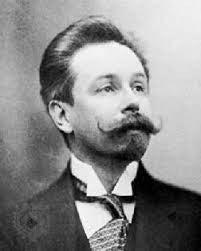
Scriabin
Scriabin was one of the most innovative and most controversial of early modern composers. The Great Soviet Encyclopedia said of Scriabin that, "No composer has had more scorn heaped on him or greater love bestowed." Leo Tolstoy described Scriabin's music as "a sincere expression of genius." Scriabin had a major impact on the music world over time, and influenced composers such as Igor Stravinsky, Sergei Prokofiev, and Nikolai Roslavets. However Scriabin's importance in the Russian and then Soviet musical scene, and internationally, drastically declined after his passing. According to his biographer Bowers, "No one was more famous during their lifetime, and few were more quickly ignored after death." Nevertheless, his musical aesthetics have been reevaluated, and his ten published sonatas for piano, which arguably provided the most consistent contribution to the genre since the time of Beethoven's set, have been increasingly championed.
Scriabin
HUMPERDINCK Hänsel und Gretel - Prelude
BACH Two Chorales
BEETHOVEN Symphony No. 1
BRAHMS Piano Quartet No. 1
VIVALDI Concerto in D minor
SCRIABIN Symphony No. 3
RAVEL Pavane pour une infante défunte
DEBUSSY Nuages & Fêtes
R. STRAUSS Rosenkavalier Waltzes
Broadcast recordings, 1938
Total duration: 2hr 37:46
NBC Symphony Orchestra
conducted by Artur Rodziński
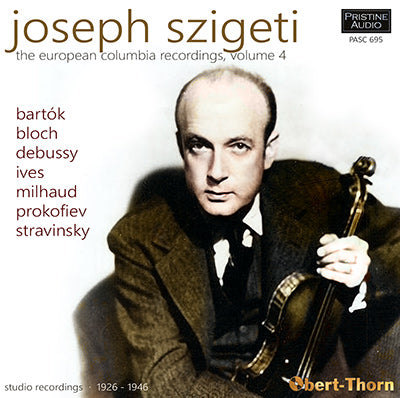
WARLOCK Capriol Suite
PROKOFIEV Violin Concerto
BARTÓK Hungarian Folk Tunes
BARTÓK Romanian Folk Dances
IVES Violin Sonata No. 4
BLOCH Violin Concerto
music by Debussy, Ravel, Milhaud, Lie, Szymanowski, Scriabin, Stravinsky
Studio recordings, 1926-46
Total duration: 2hr 4:59
Joseph Szigeti, violin
Nikita Magaloff, Kurt Ruhrseitz, Béla Bartók, Andor Foldes, piano
London Philharmonic Orchestra
conducted by Sir Thomas Beecham
Philharmonia Orchestra
conducted by Constant Lambert
Orchestre de la Société des Concerts du Conservatoire
conducted by Charles Munch
- Previous
- Page 2 of 2
-
Next